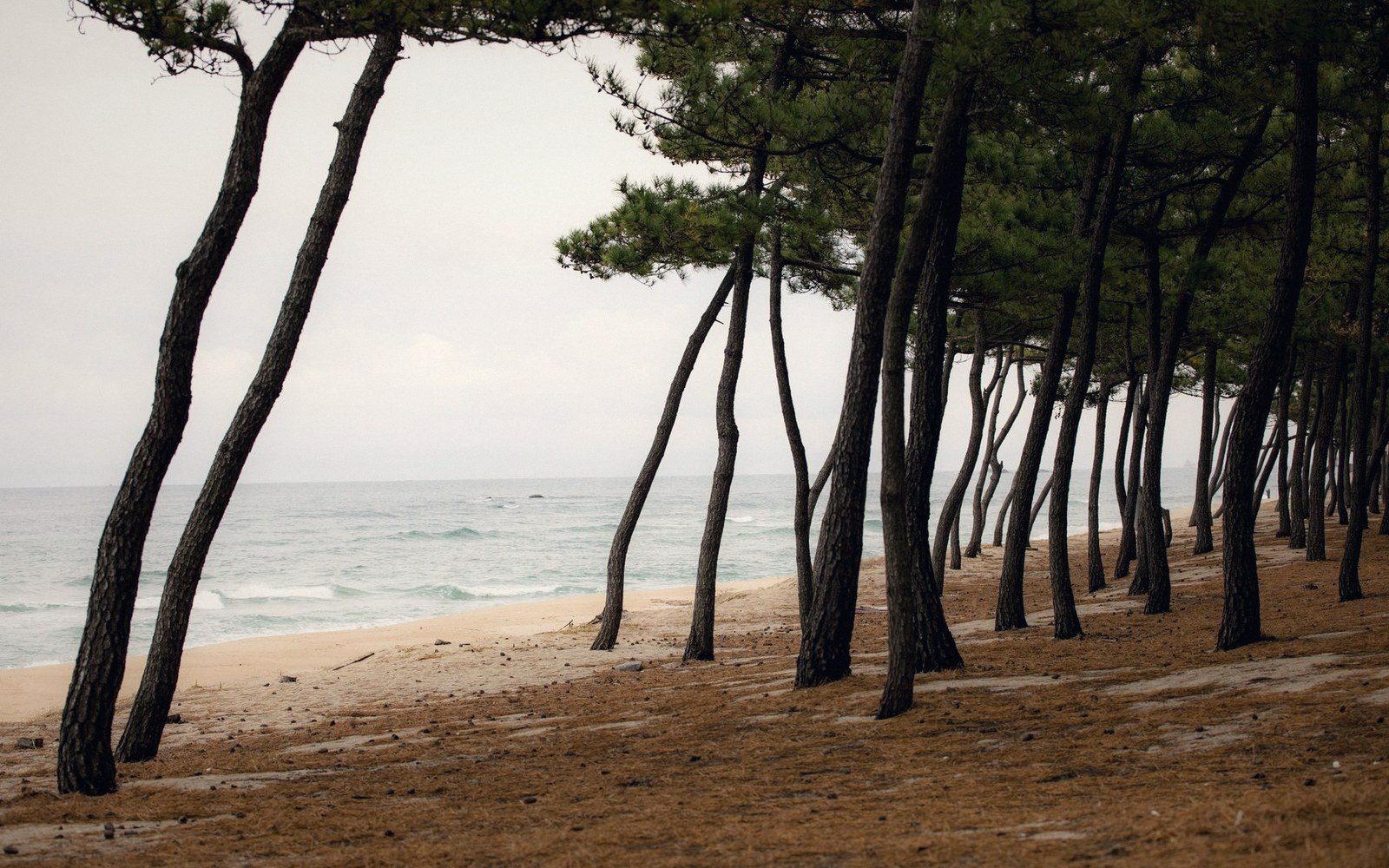
A tree that points
Araucaria columnaris is hard to mistake. Where most conifers taper to a point, this one rises as a near-perfect column — trunk straight, branches held close, crown narrow enough to seem almost drawn with a ruler.
It is native to New Caledonia, growing naturally along the coast of Grande Terre and on the Île des Pins, where James Cook encountered it during his 1774 voyage and noted the distinctive silhouette against the skyline. The common name has stuck ever since.
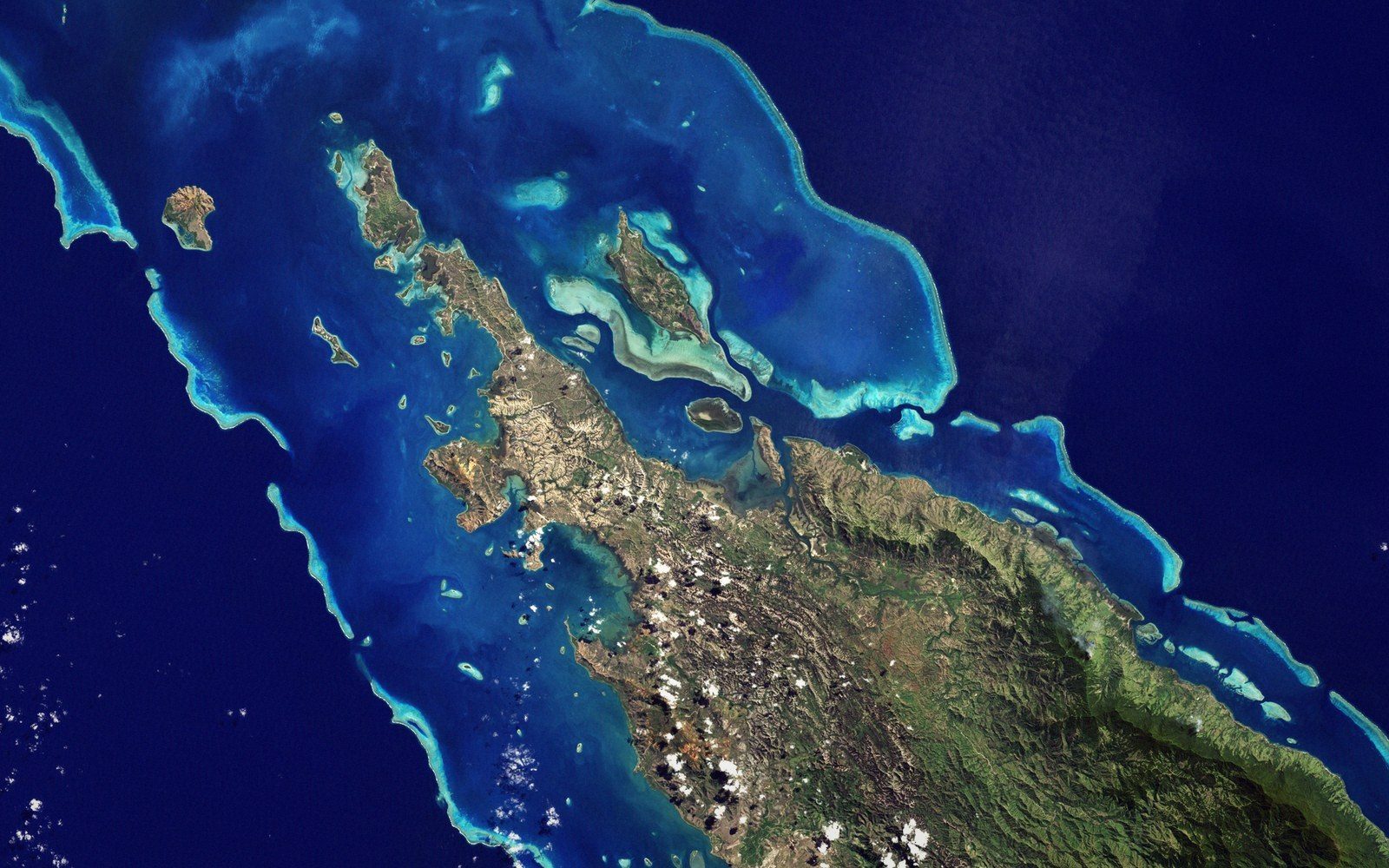
What Cook could not have known is that the tree leans. Not randomly, and not from wind: Araucaria columnaris tilts consistently toward the equator, so that specimens in the northern hemisphere lean south and those in the southern lean north. A 2017 study confirmed the pattern across more than 250 trees planted worldwide, finding an average lean of around eight degrees — greater in trees planted far from their native latitude.
The mechanism is not fully resolved. Asymmetric light response is the leading hypothesis: the sun-facing side of the crown grows more vigorously, slowly pulling the axis off vertical over decades. Because New Caledonia sits close to the Tropic of Capricorn, the lean is modest on home ground; transplanted to Europe or North America, the same species leans noticeably more.
Field notes
Facts, threats and strongholdsKey fact
- Average equatorial lean — around 8 degrees in trees studied far from native latitude; consistent direction regardless of hemisphere
In its native range the tree grows in coastal and disturbed terrain, tolerating the thin, often metal-rich soils at the margins of the maquis minier — the low, metal-adapted scrub — without being strictly confined to ultramafic ground. It is one of roughly eighteen Araucaria species, a lineage with deep Gondwanan roots; New Caledonia alone holds thirteen endemic species in the genus, a concentration found nowhere else on earth.
The columnaris is now planted widely across the Pacific and beyond as an ornamental, which is how the leaning data became possible: every misaligned tree in a California park or Hawaiian garden is, inadvertently, a data point. In New Caledonia it remains what Cook saw — a coastal marker, the tallest vertical on a low shore, its crown pointing, with quiet precision, back toward the equator.