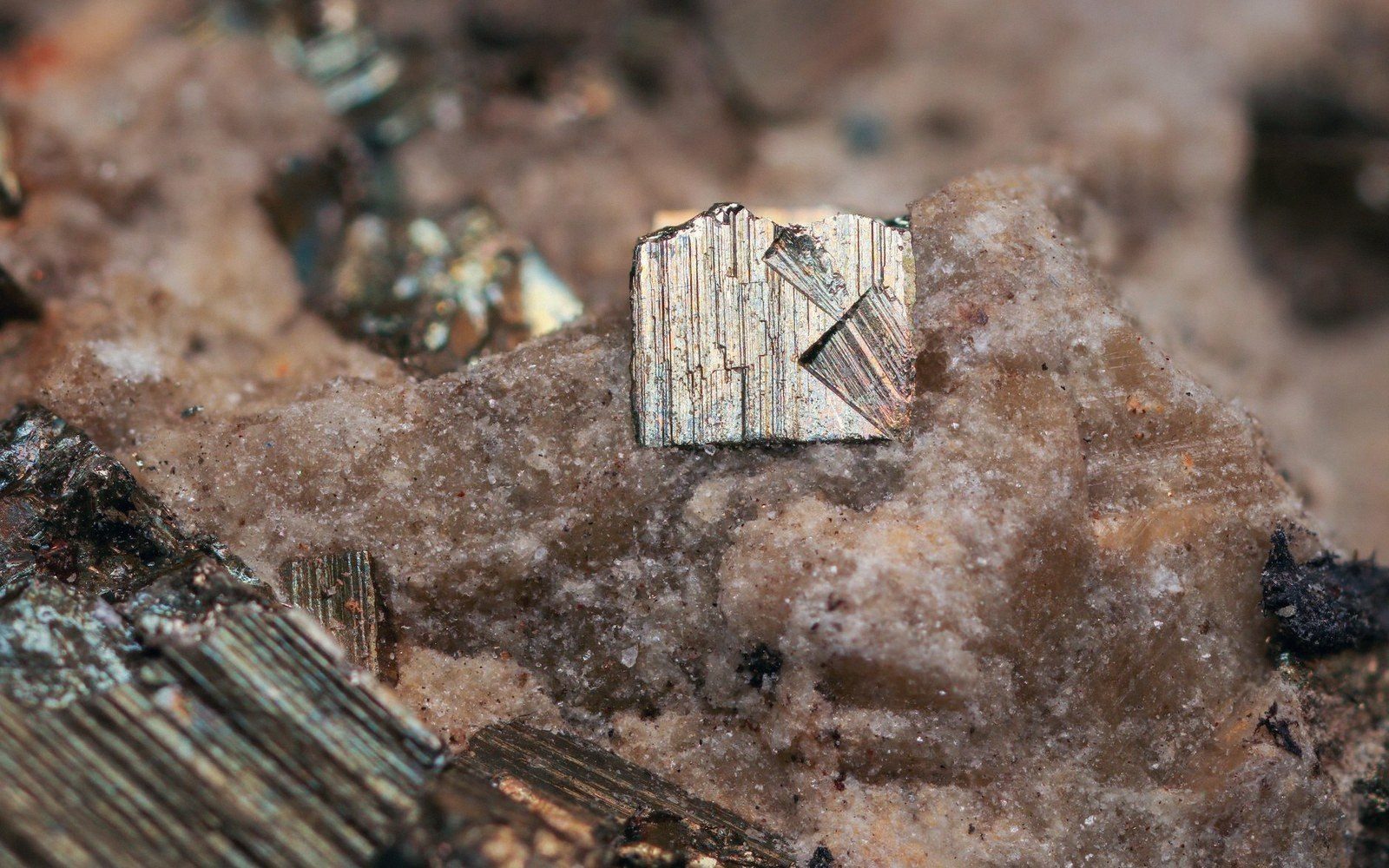
A mineral and the man who catalogued it
In 1864, the French geologist Jules Garnier arrived in New Caledonia on a survey mission and found, in the island's southern massifs, a vivid apple-green ore he had not seen described before. It was a hydrated nickel silicate — nickel chemically bonded into the crystal structure of a serpentine mineral — and it would eventually carry his name: garnierite.
The colour comes from the nickel itself, and a fresh surface of the ore is striking enough that early prospectors could identify rich ground by eye. Garnier's surveys established that the deposit was not localised but colossal, draped across the ultramafic massifs that cover the southern third of Grande Terre and appear in smaller bodies along the east coast.
The geology behind the ore is specific. The basement rock is peridotite — the dense, olivine-rich material of the upper mantle, pushed onto the island's surface during a tectonic obduction event around thirty-four million years ago. When peridotite weathers under tropical conditions over millions of years, nickel and other metals concentrate progressively through the soil column.
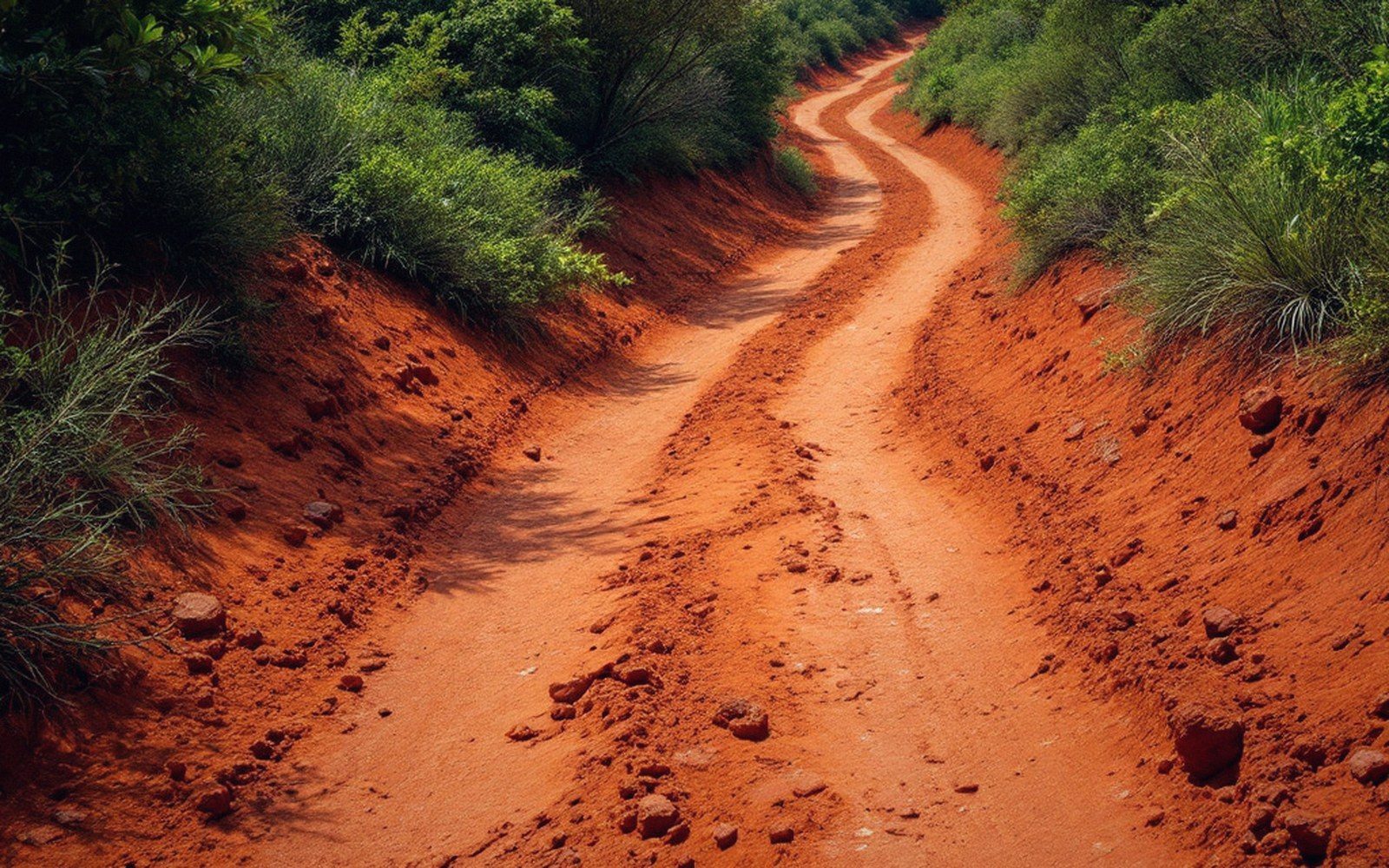
The uppermost layer becomes laterite: a hard, iron-saturated red crust that is itself an ore, though lower-grade than the garnierite found deeper in the saprolite zone directly above the fresh rock. Grande Terre holds both types simultaneously, stacked in a readable sequence from the surface down.
The figures
Lifted out of the textThio and the shape of extraction
The mines at Thio, on the east coast, are among the oldest continuously worked nickel sites in the world. Open-cast workings began there in the 1870s, making Thio the earliest industrial mining centre on the island and, for a long period, one of the principal sources of nickel globally. The Société Le Nickel, founded in 1880, organised extraction on an industrial scale and remains a central institution in the territory's economy today, operating under the SLN acronym.
What open-cast laterite mining does to the landscape is immediately legible. The red laterite crust, once exposed, has almost no capacity to revegetate quickly: the soil chemistry, dominated by iron and magnesium and sharply deficient in phosphorus and calcium, excludes most colonising plants. The result is that old and active workings alike leave vivid ochre and orange scarring on slopes that elsewhere carry forest or the low scrub of the maquis minier.
Seen from altitude, the contrast between intact ultramafic vegetation and stripped laterite is blunt. The Thio area and the road south toward the Baie de Prony display both states continuously — forested ridges interrupted by open cuts and tailings faces that grade through rust and brick-red to the pale saprolite below.
The scale of the resource is reflected in a single figure that the IRD and industry surveys have confirmed repeatedly: New Caledonia holds roughly a quarter of the world's known nickel reserves. That concentration in one relatively small island is a direct consequence of the obduction event that brought mantle rock to the surface, and of the long humid weathering that followed.
What the ore leaves behind
Laterite is not inert once disturbed. Rain carries iron-rich sediment from exposed faces into stream systems, and the downstream effects on freshwater and near-shore marine environments have been documented by researchers at the IRD and the Muséum national d'Histoire naturelle. The Thio river and its estuary carry measurable metal loads.
Where the scarring reaches close to the coast — as it does at several points on the east coast — the transition from red slope to fringing reef is compressed into a very short distance, and the inputs to the lagoon are direct.
Field notes
Facts, threats and strongholdsKey geological terms
- laterite — iron-saturated red crust formed by intense tropical weathering of ultramafic rock; the uppermost ore layer
- garnierite — hydrated nickel silicate; vivid green ore named for Jules Garnier; found in the saprolite zone below laterite
- saprolite — deeply weathered but not fully oxidised rock; the zone where garnierite concentrates
- obduction — tectonic process by which oceanic or mantle rock is thrust onto a continental margin; the mechanism that put peridotite at Grande Terre's surface
Garnierite itself, the beautiful green ore, is now partly a museum specimen and partly a commercial curiosity — polished nodules are common in mineral collections worldwide.
But its significance is geological before it is economic: it marks the exact interface between mantle rock and tropical weathering, the place where the deep earth and the long wet surface have been in contact long enough to produce something genuinely unusual. That process shaped Grande Terre's southern quarter more thoroughly than almost any other single fact about the island.