The living arrangement
Customary tenure in Kanak society is not a relic preserved in law or a tradition performed for outsiders. It is the operative framework through which clans understand their place in the world, their obligations to each other, and their right to speak in any given territory. The land holds the ancestors; it therefore holds the identity of everyone who descends from them.
Each clan — the basic unit of Kanak social organisation — is attached to a specific territory whose boundaries are maintained through oral history, ceremony, and continuous negotiation between lineages. Land is not bought and sold within this system.
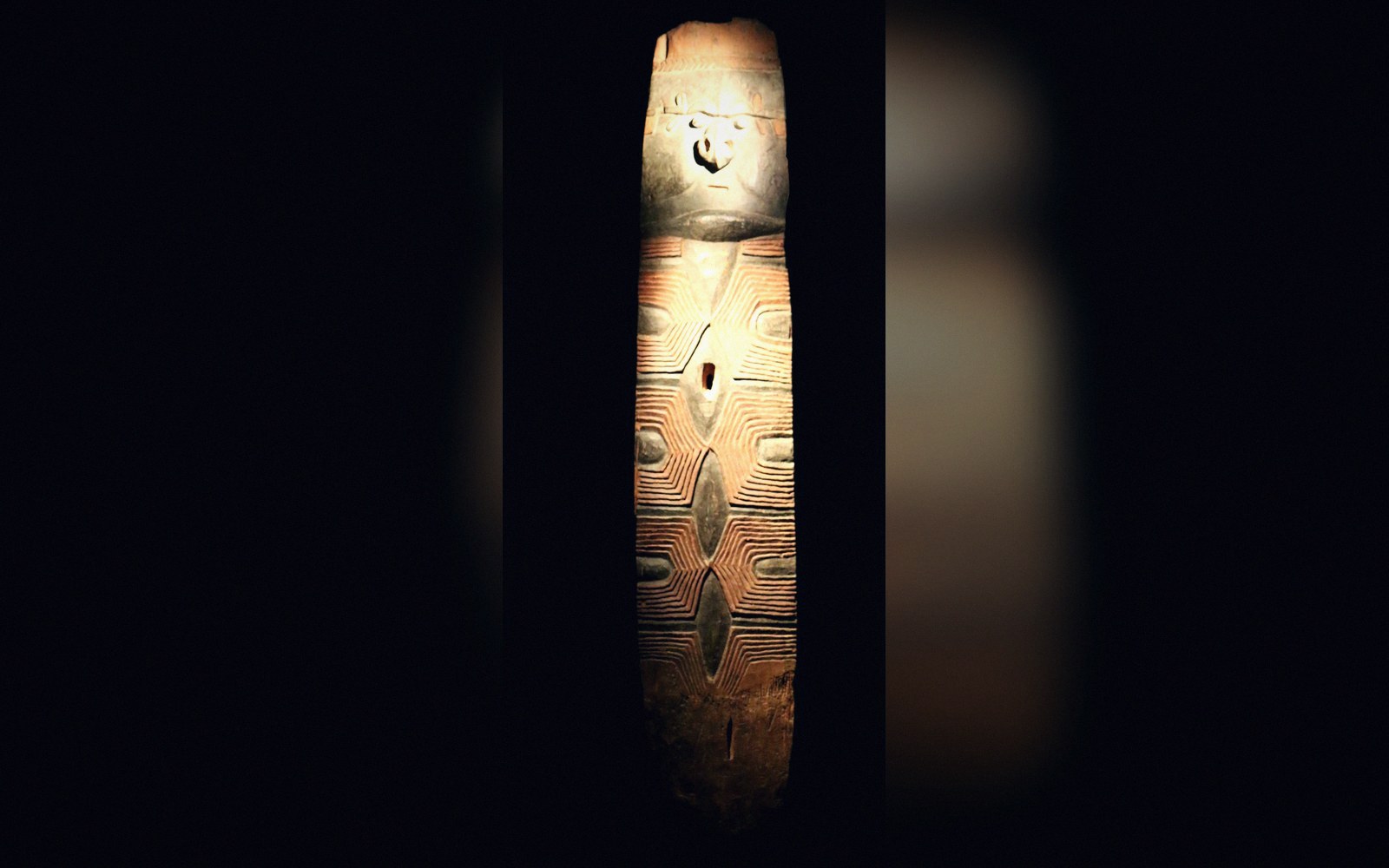
It is transmitted, loaned, and exchanged through protocols that carry as much weight as any written title. A clan's relationship to a piece of ground can be layered: one group may hold primary attachment, another a secondary right to cultivate, a third a ceremonial role tied to a particular tree or water source.
The word pays (country, homeland) is the French term most often used in New Caledonia to describe these territories, but the Kanak languages carry their own precise vocabulary. Across the roughly thirty Kanak languages spoken on Grande Terre and the Loyalty Islands — Lifou, Maré, Ouvéa — the terms for land, clan, and ancestral place are not easily separated, because the concepts themselves are not separate.

The grande case, the conical ceremonial house at the centre of a clan's settlement, is both the physical and symbolic anchor of this arrangement. The central post is often associated with a founding ancestor; the structure does not stand apart from the land — it enacts the clan's claim to be there.
French colonial administration from the 1850s onward compressed Kanak populations into reserved areas called réserves, rupturing many of these territorial arrangements and displacing clans from ancestral ground. The consequences of that compression persist. Customary land today coexists legally with private and state-held land under a dual system, and the institutions governing each are formally distinct. Customary land cannot, in principle, be alienated — it cannot be sold out of the system that holds it.
Field notes
Facts, threats and strongholdsKey terms
- réserves — colonial-era reserved zones to which Kanak populations were confined from the mid-nineteenth century onward
- grande case — the conical clan house that physically marks a clan's place on its territory
What this system does
- Land transmits identity, not just property rights
- Rights to a territory can be layered: primary attachment, cultivation rights, and ceremonial roles held by different groups
- Customary land cannot legally be sold; it is governed through clan authority, not the state property system
What this means in practice is that decisions about land use, access, and transmission on customary ground still pass through clan structures, through the recognised authority of chiefs, and through the social protocols that have never required a written deed to function.