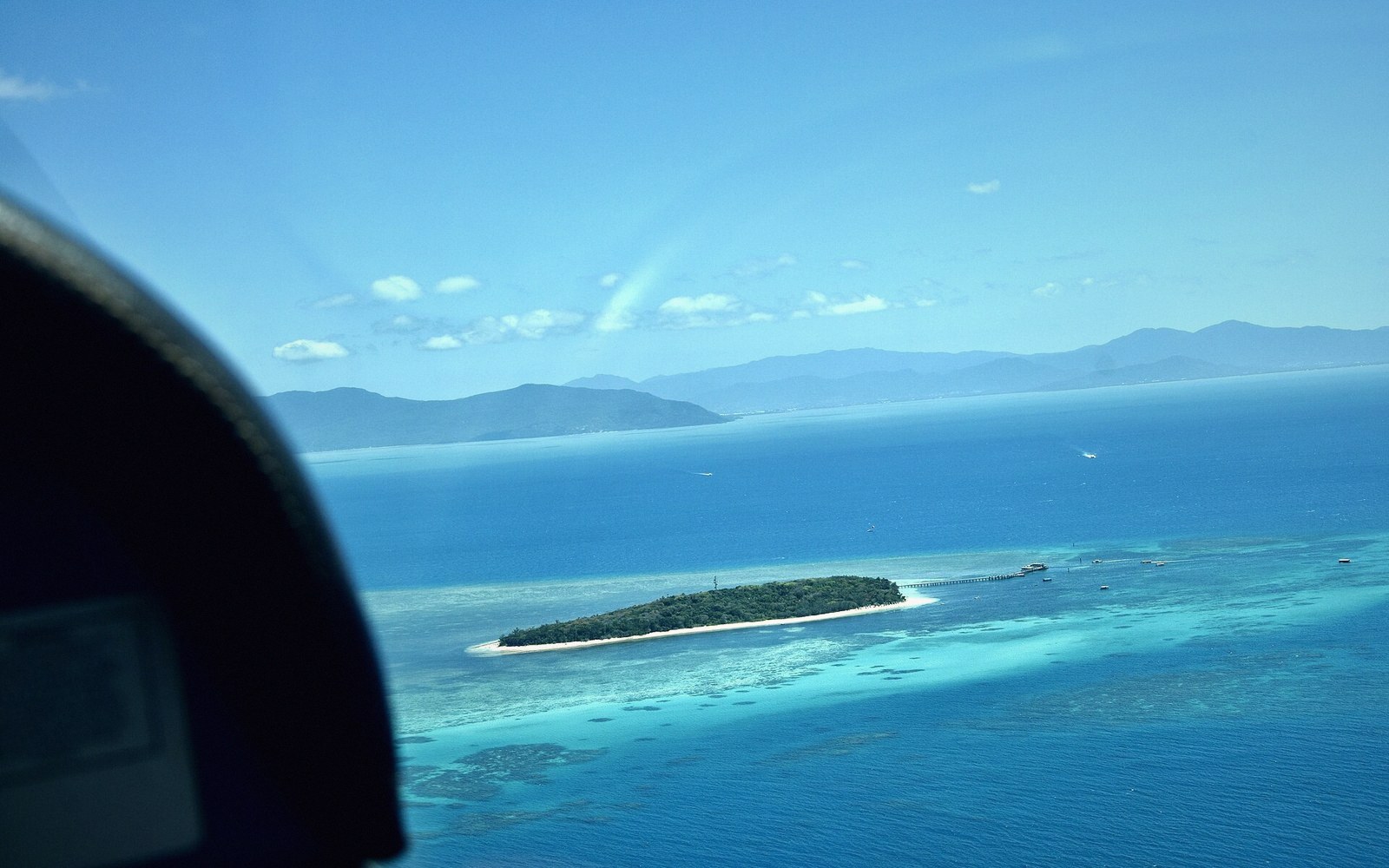
Two lines in the water
For most of its length, New Caledonia's reef system runs as a single barrier: one continuous wall of coral separating the lagoon from the open Pacific. Off the north-west coast of Grande Terre, that pattern breaks down.
Between roughly Poum in the far north and the waters south of the Belep Islands, there are two parallel reef lines — an inner barrier and an outer one — enclosing a strip of deeper open water between them. Double barrier systems are rare enough globally that this stretch ranks among the few documented examples anywhere on earth.
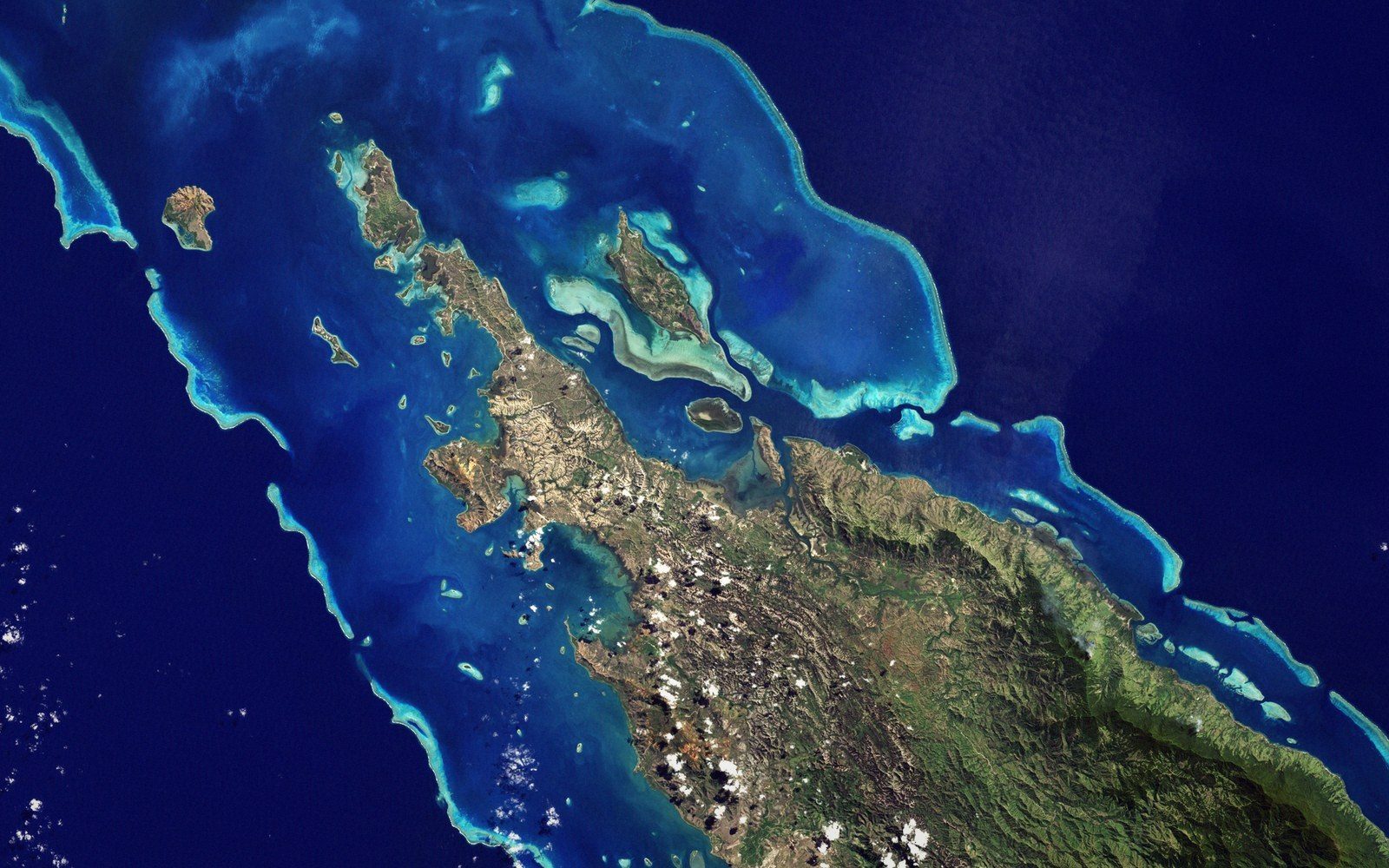
The outer reef sits at the normal oceanic edge, taking the full swell from the Coral Sea. The inner reef lies several kilometres shoreward, separated from its counterpart by a passage that is neither true lagoon nor open ocean — a liminal body of water with its own circulation, its own turbidity regime, and a substrate quite different from the sandy floor of the main enclosed lagoon.
The origin of the double structure is tied to the complex subsidence history of the north-west shelf. As Grande Terre's tectonic platform tilted and adjusted across geological time, sea-level fluctuations left reef frameworks at different depths and positions.
When sea levels rose to their present stand following the last glacial maximum, corals colonised both the older inner platform and the outer margin — the two growing structures reflecting two separate foundations rather than a single one that split. The IRD and associated institutions have mapped the north-west reef morphology in detail, identifying the passage between the two lines as a distinct sedimentary and hydrological environment.
For reef ecology, the arrangement matters. The outer barrier buffers the passage waters from oceanic energy, allowing sediment and nutrients to behave differently from the main lagoon. Species assemblages on the facing slopes of the two reefs differ accordingly — the outer wall exposed, high-energy, and dominated by robust coral forms; the inner wall sheltered and more varied in its low-light communities.
Field notes
Facts, threats and strongholdsKey geography
- The passage — the strip of water between the inner and outer reef lines; neither full lagoon nor open sea
- Outer reef — oceanic-facing, high-energy, robust coral forms
- Inner reef — sheltered, varied low-light communities on its shoreward slope
The UNESCO World Heritage Centre listing of the New Caledonia lagoons encompasses this north-west sector, though the double barrier's specific geometry tends to be overshadowed by the sheer scale of the system as a whole.